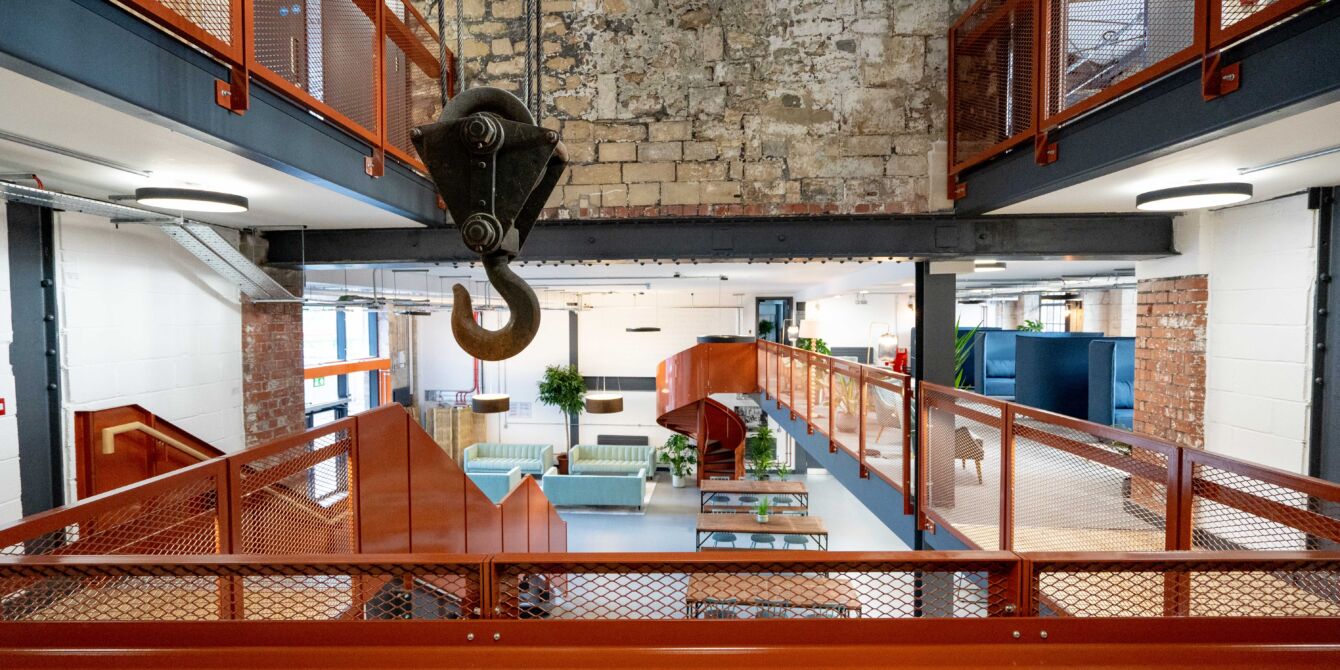
The practice has a great deal of in-house expertise in heritage buildings. It is this background that drives a process of understanding what is valuable in an existing site. An intrinsic part of our thinking and design process is considering how this can be harnessed to create a sense of distinctiveness and a lasting legacy for the users and wider community. Allowing historic buildings to adapt and respond to changing needs and functionality safeguards their continued relevance and use as well as the physical preservation of building fabric.
A connecting thread between all carbon reduction strategies for historic buildings is that there is never a ‘silver bullet’ solution to transform these buildings from high to low operational carbon.
We work holistically, to find solutions that work with the character and existing fabric, carefully preserving and protecting the buildings’ storytelling features.
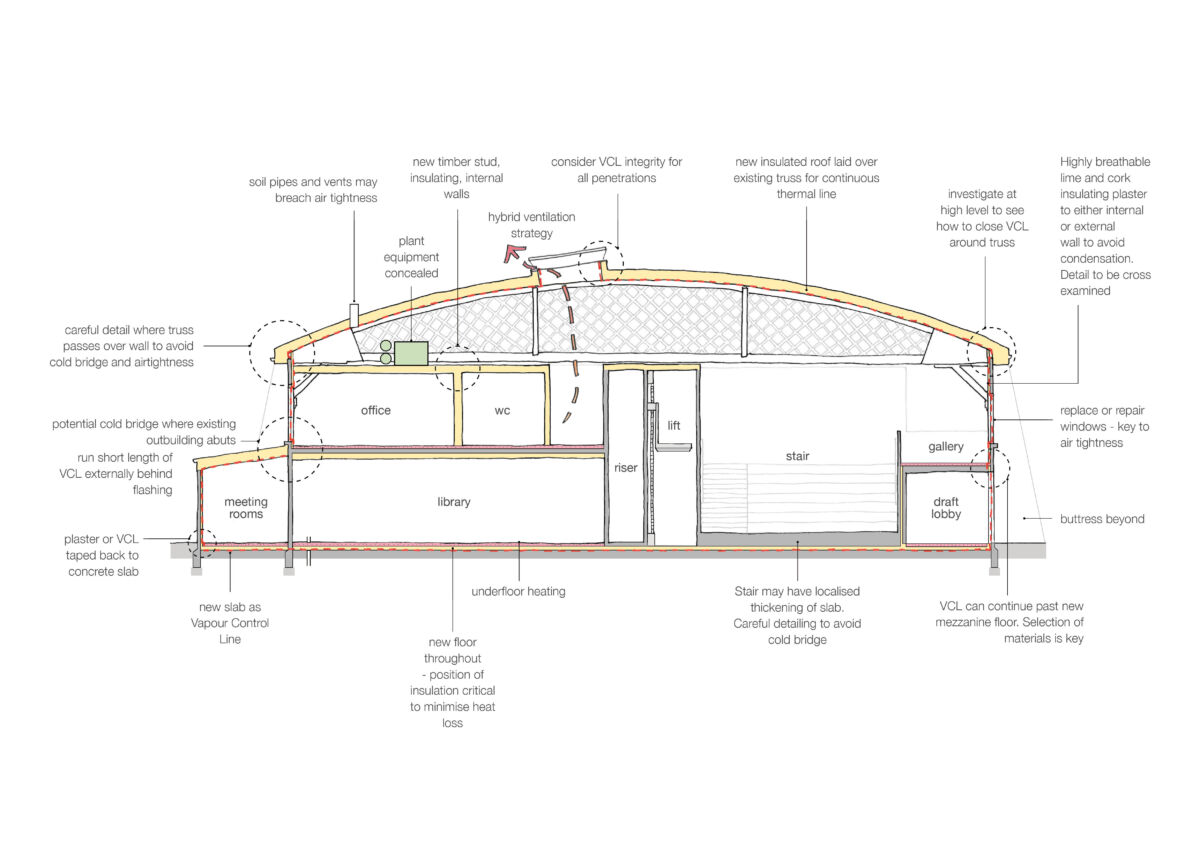
Working within a wider team of consultants allows us to model appropriate strategies, working with the client to review relevant merits, costs and heritage impacts. When considering how to reduce energy consumption for historic buildings, we adopt the following approach:
1. Be mean: use less energy
2. Be lean: supply energy efficiently
3. Be green: use renewable energy
4. Be seen: monitor + share results
By choosing breathable, local and low impact materials, we minimise the introduction of new embodied carbon into the building. This can be applied in a way that is sensitive to historic fabric, reversible and where possible, re-useable.